
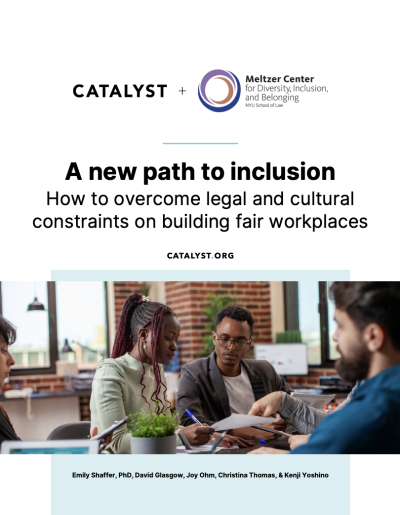
- Report year:2026
- Report author: Emily Shaffer, PhD , David Glasgow , Joy Ohm , Christina Thomas & Kenji Yoshino
- Organisation: Catalyst
Over the past decade, diversity, equity, and inclusion (DEI) efforts have evolved significantly. While many organizations expanded inclusion initiatives in the late 2010s and early 2020s, recent legal, regulatory, and cultural challenges have created uncertainty around these programs.
A 2025 study by Catalyst and the Meltzer Center for Diversity, Inclusion, and Belonging, based on responses from more than 2,000 people in the United States, found that most organizations remain committed to inclusion and that employees continue to value workplaces that prioritize fairness and diversity.
The report also highlights that many organizations have adjusted how they communicate and implement DEI strategies, particularly federal contractors facing greater legal pressure. Despite these challenges, stronger inclusion efforts continue to be associated with positive business outcomes, including improved efficiency and workplace culture.
The study recommends an “earned universalism” approach, combining universal benefits for all employees with targeted support for marginalized groups, while helping organizations navigate current legal and societal expectations.
A 2025 study by Catalyst and the Meltzer Center for Diversity, Inclusion, and Belonging, based on responses from more than 2,000 people in the United States, found that most organizations remain committed to inclusion and that employees continue to value workplaces that prioritize fairness and diversity.
The report also highlights that many organizations have adjusted how they communicate and implement DEI strategies, particularly federal contractors facing greater legal pressure. Despite these challenges, stronger inclusion efforts continue to be associated with positive business outcomes, including improved efficiency and workplace culture.
The study recommends an “earned universalism” approach, combining universal benefits for all employees with targeted support for marginalized groups, while helping organizations navigate current legal and societal expectations.